Wpadnij do Łukowa / Come over to Łuków [Adventure Lab BONUS]
For English version - click here
Kesz NIE znajduje się na współrzędnych startowych. Aby poznać miejsce ukrycia, musisz przejść przez wszystkie etapy skrytki Adventure Lab "Wpadnij do Łukowa / Come over to Łuków"

Zdaję sobie sprawę, że maleńki Łuków, to nie to samo co duże miasta - Warszawa, Kraków, Gdańsk i trudno będzie o dobre opinie. Prawdopodobnie przygoda Adventure Lab "Wpadnij do Łukowa / Come over to Łuków" nie porwie wszystkich keszerów, ale może niektórym przypadnie do gustu.
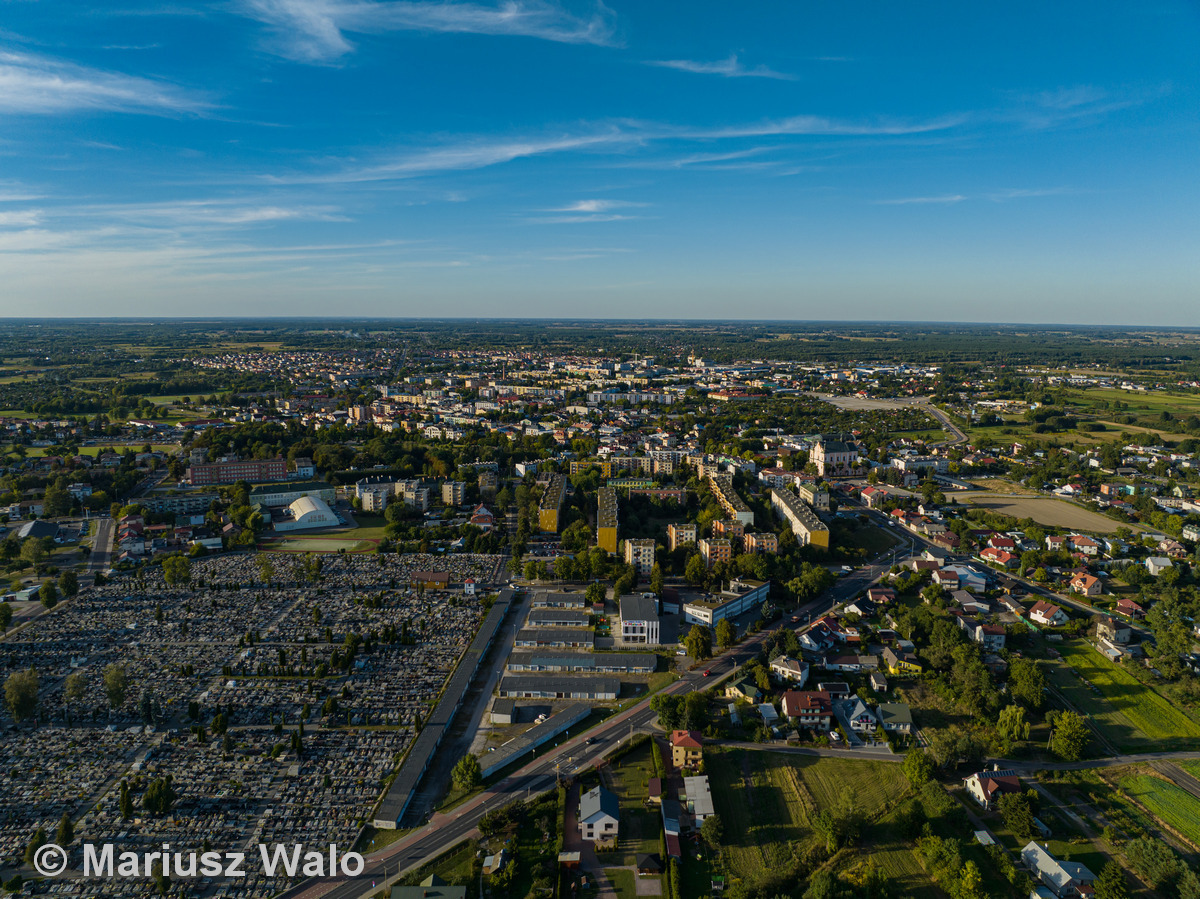 Łuków - widok z lotu ptaka (drona). Fot. Mariusz Walo / Łuków - bird's eye view (drone). Photo Mariusz Walo
Pomyślałem sobie, że skoro mam kredyt na stworzenie przygody i mogę decydować gdzie ona będzie, to czemuż miałbym nie wyróżnić Łukowa - miasta, gdzie mieszkam, gdzie zakładam inne skrytki?
Nie urodziłem się w Łukowie, zamieszkałem tutaj po studiach. Z dnia na dzień obserwuję zmiany jakie w nim zachodzą - według mnie zmiany na lepsze.
Postaram się nie przynudzać i po krótce przedstawić historię miasta i jego atuty w opisie do BONUSA - w samej przygodzie Adventure Lab - miejsca jest naprawdę niewiele, zwłaszcza wtedy, gdy chce się zmieścić wersję polską i angielską.
Łuków jest miastem będącym gminą miejską w Polsce, w województwie lubelskim, w powiecie łukowskim. Jest siedzibą władz powiatu łukowskiego i gminy wiejskiej Łuków. W Łukowie zlokalizowany jest węzeł kolejowy ze stacją węzłową, istnieje przemysł: obuwniczy, mięsny, spożywczy. Łuków jest również największym ośrodkiem miejski między Lublinem, Siedlcami, Puławami a Białą Podlaską.
Dotychczasowe źródła historyczne nie precyzują, kiedy powstał Łuków. Umowną datą powstania miasta jest rok 1233, z którego pochodzi pierwsza wzmianka historyczna o istniejącej już kasztelanii łukowskiej.
Nazwa Łuków związana jest najprawdopodobniej z topografią terenu i pochodzi od prasłowiańskiego słowa łęg (ług, łuk) oznaczającego teren bagnisty, nizinny, trudno dostępny. Niektórzy historycy i językoznawcy sugerowali w przeszłości, że nazwa miasta może być związana z używaną w średniowieczu bronią o nazwie łuk, jednak dokładniejsze badania nie potwierdziły tezy, jakoby w mieście wytwarzane były łuki. Źródła nie potwierdzają również hipotezy, że nazwa Łuków wywodzi się od Łuka, czy Łukasza, ewentualnego właściciela miejscowości.
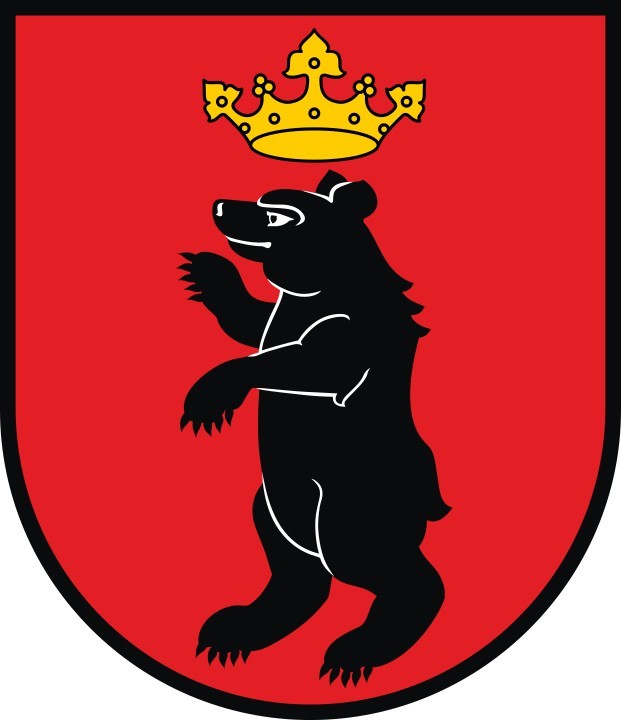
W herbie miasta widnieje stojący na dwóch łapach niedźwiedź, którego według legendy napotkał w podróży jeden z władców piastowskich. Zwierzę o czarnej maści przedstawione zostało na tle czerwonej tarczy, a nad głową niedźwiedzia widnieje korona symbolizująca, iż Łuków był w przeszłości miastem królewskim.
Miasto położone na pograniczu wśród bagien i lasów, od początku swojego istnienia stanowiło ważny punkt strategiczny i zabezpieczało granice Polski przed najazdami Jaćwingów, Litwinów i Tatarów. Będąc wielokrotnie niszczony, Łuków musiał wzmocnić swoją obronę i w tym celu w 1250 r. książę Bolesław V Wstydliwy sprowadził tu rycerski zakon Templariuszy. Książę miał też w planach osadzenie w Łukowie biskupstwa.
Obecnie na terenie Łukowa znajduje się kilka parafii rzymskokatolickich, z których najstarsze to: "Św. Rocha", "Przemienienia Pańskiego", "Podwyższenia Krzyża").
Z Łukowem związani są również Żydzi, którzy osiedlili się na terenie Łukowa już w XIV wieku. Szybki wzrost ich liczebności doprowadził do tego, że na przełomie XIX i XX wieku stanowili ok. 2/3 liczby ludności (ok. 8000). Niegdyś istniała w Łukowie synagoga - u zbiegu ulic Bóżnicznej (obecnie ul. Zdanowskiego) i Staropijarskiej, zburzona w lipcu 1944 r. W pobliżu skrzyżowania obydwu ulic znajduje się tablica opisująca jej istnienie oraz historię Żydów. Ponadto przy ulicy Warszawskiej do dziś stoi obelisk upamiętniający Żydów w Łukowie, wokół którego ustawione zostały macewy odnalezione na terenie miasta.
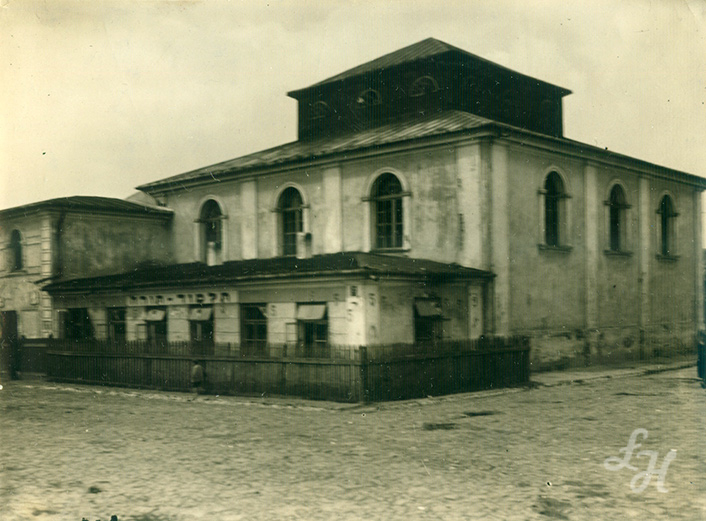 Nieistniejąca już łukowska synanoga. Fot. Serwis internetowy Łuków Historia / The synagogue in Łuków, which no longer exists. Photo Łuków Historia website
Historia jest obszerna, po więcej informacji zapraszam do lektury chociażby Wikipedii.
Jak już wspomniałem na początku (po krótce) w Łukowie przetrwały pewne obiekty związane z historią miasta. Jednakże powstały też nowe miejsca, które mają na celu zaspokojenie potrzeb większości mieszkańców (chyba nie wszystkich, bo na pewno są tacy, którzy krytykują - mają do tego prawo).
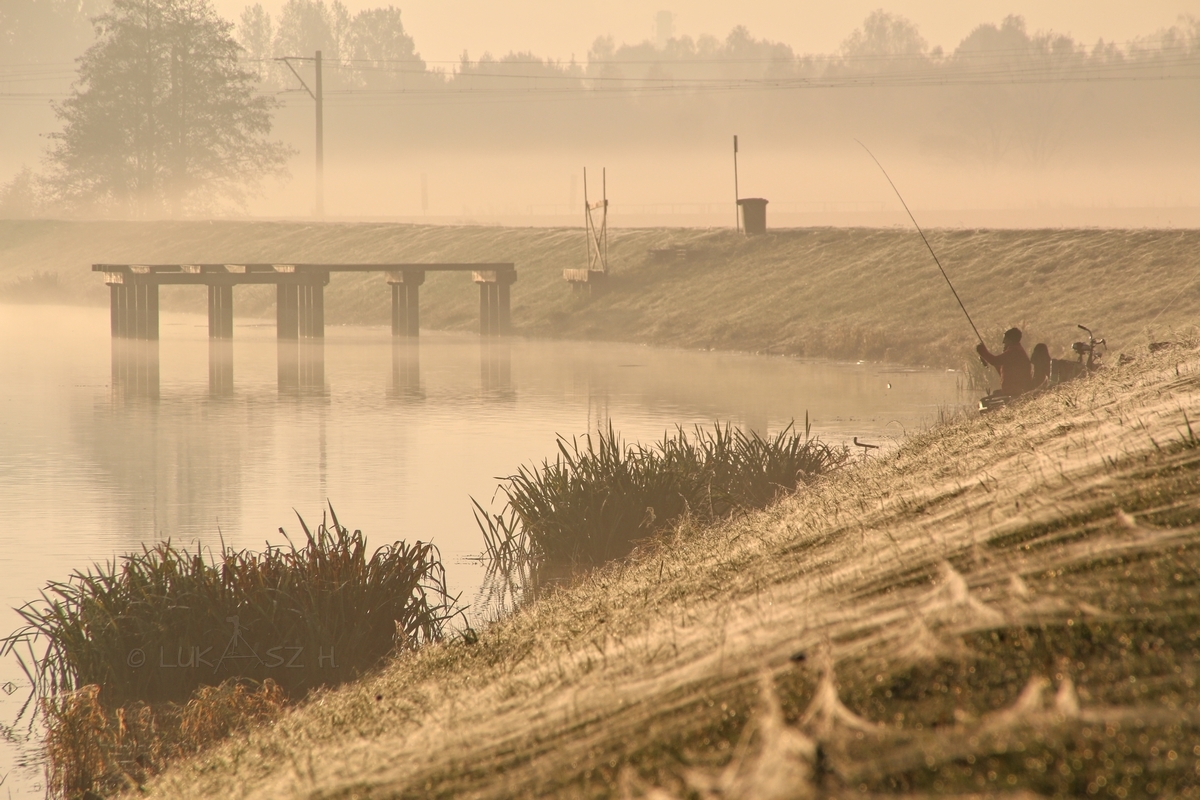 Zalew Zimna Woda bardzo wczesnym rankiem. Fot. Zasoby własne / Zimna Woda lagoon very early in the morning. Photo Own resources
W Łukowie jest szeroki dostęp do medycyny, edukacji, z powodzeniem można uprawiać sport (mamy boiska, basen sportowy, a latem rekreacyjnie można pomoczyć się w kompleksie odkrytych basenów ze zjeżdżalniami).
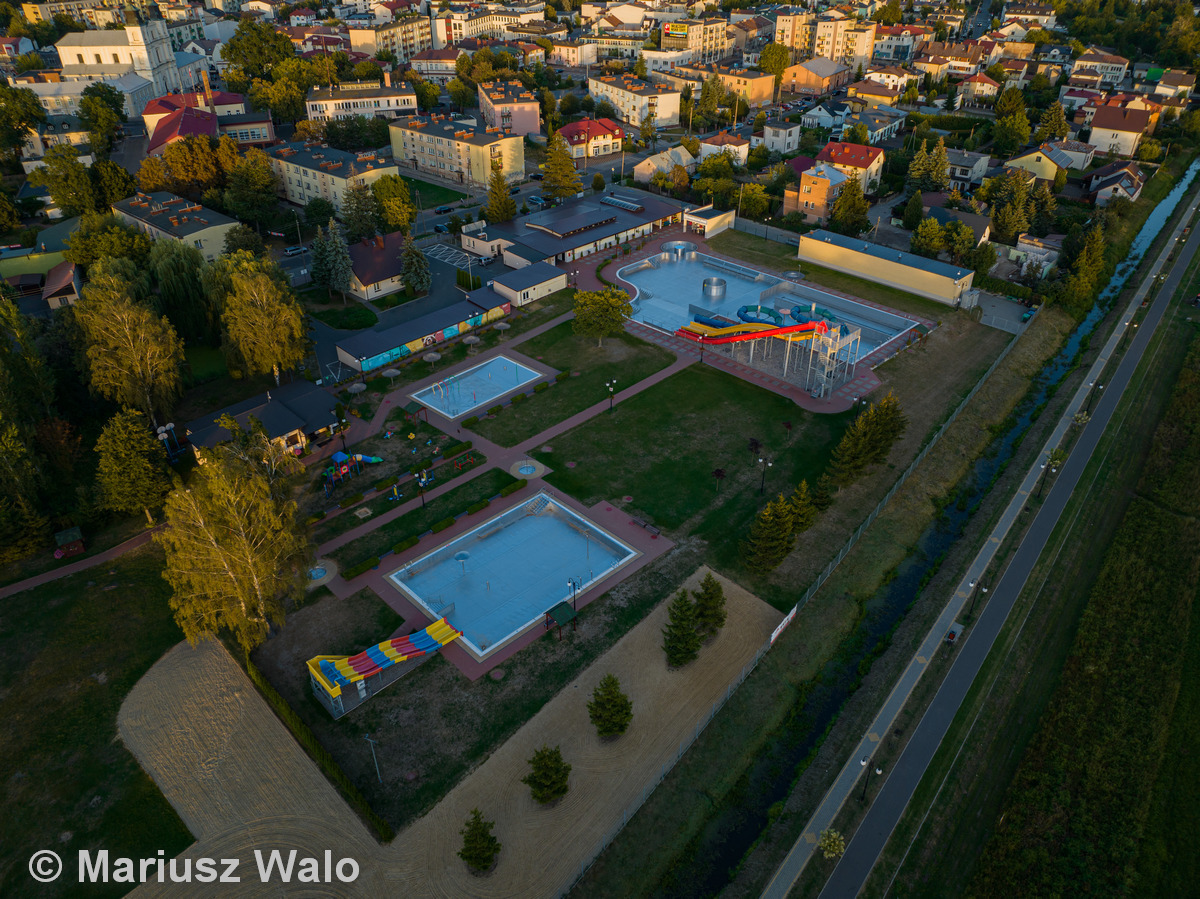 Łuków - widok z lotu ptaka (drona) - baseny letnie. Fot. Mariusz Walo / Łuków - bird's eye view (drone) - summer pools. Photo Mariusz Walo
Jeśli chcesz więcej przestrzeni, świeżego powietrza - koniecznie odwiedź ogromny kompleks leśny, w którym znajdują się m.in. rezerwaty przyrody:
- Jata - leśny rezerwat przyrody znajdujący się na terenie gminy Łuków - część o powierzchni 337,42 ha, objęta jest ochroną ścisłą, pozostała część, o powierzchni 779,52 ha, to rezerwat częściowy. Jest to jeden z najstarszych rezerwatów w Polsce, to miejsce gdzie szum borów jodłowych wywoła chwilę zadumy w twych myślach, a znajdujące się przy ścieżce turystycznej pomniki natychmiast przeniosą Cię w odległe czasy i wypełnią chęcią poznania kolejnych tajemnic Powstania Styczniowego oraz II Wojny Światowej,
- Topór - leśny rezerwat przyrody znajdujący się na terenie gminy Łuków, ochronie podlegają stanowiska naturalnego występowania jodły w jej północno-wschodniej granicy zasięgu.
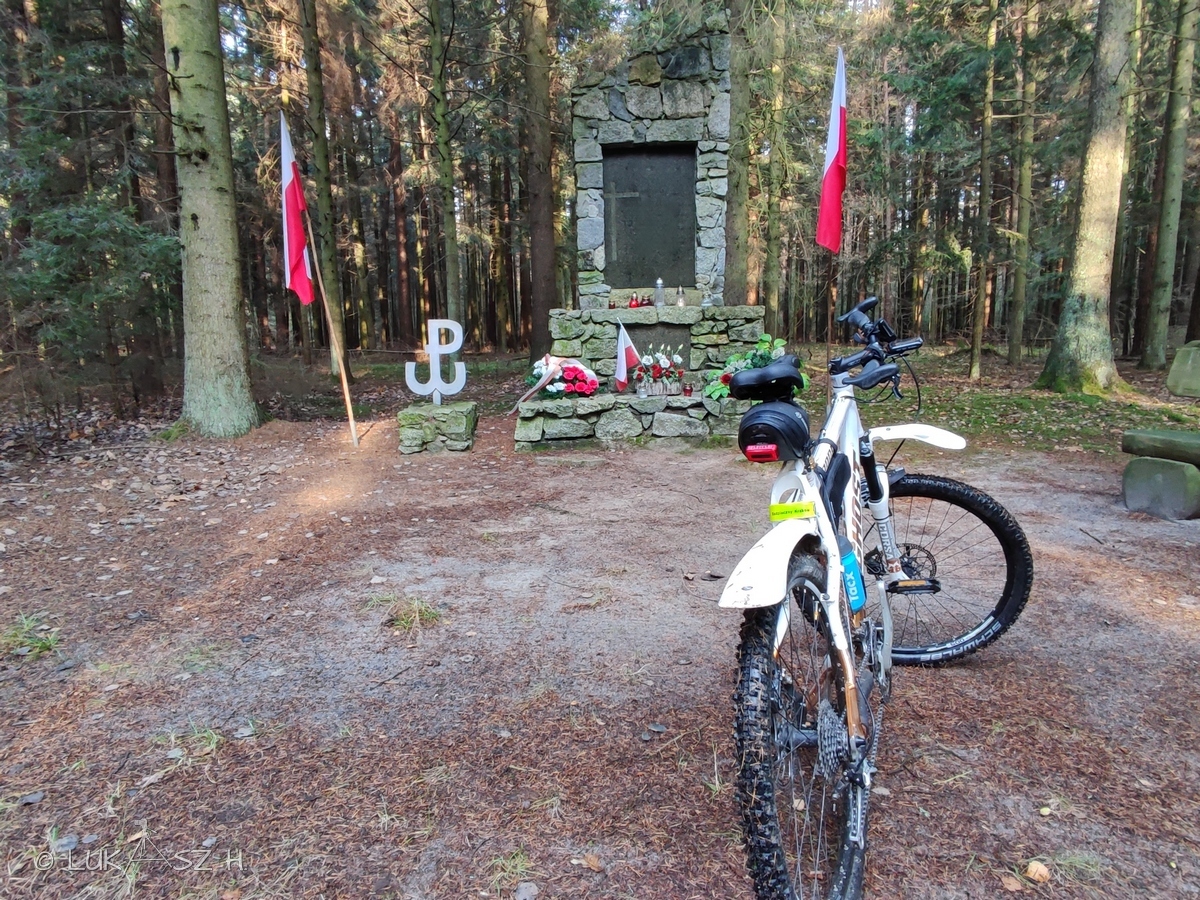 Jata - jeden z leśnych pomników. Fot. Zasoby własne / Jata - one of the forest monuments. Photo Own resources
Z powodzeniem możesz tutaj pobiegać, pochodzić z kijkami, pojeździć na rowerze, czy też po prostu pójść na zwykły spacer. Zacznij szlak od zalewu "Zimna Woda", albo podjedź bliżej rezerwatów, gdzie spokojnie możesz zostawić samochód na parkingu leśnym.
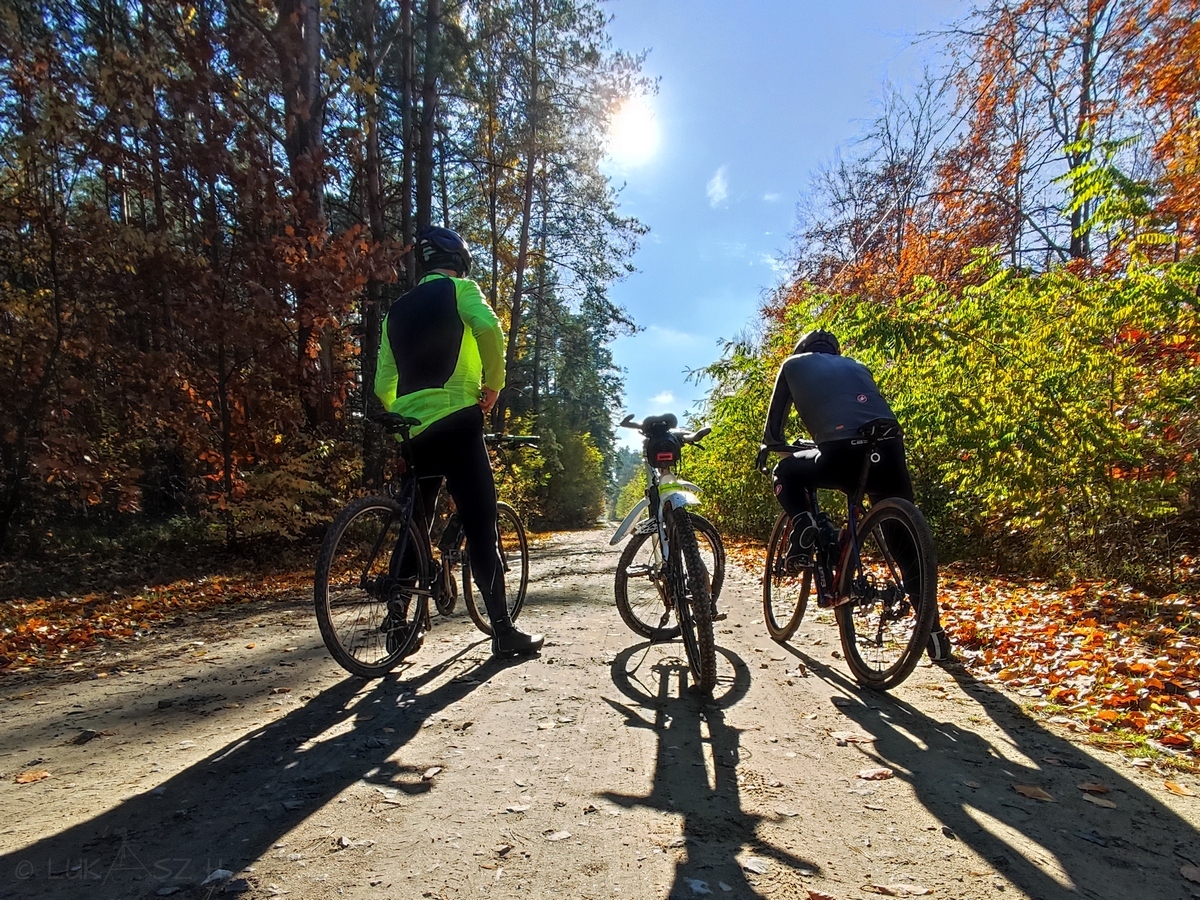 Rowerem po Jacie - dwa kółka w lesie przez cztery pory roku. Fot. Zasoby własne / By bike around Jata - two wheels in the forest for four seasons. Photo Own resources
Moim zdaniem, szczególnymi miejscami, które dzisiaj warto odwiedzić w Łukowie są:
- Muzeum Regionalne w Łukowie - poznasz tutaj kulturę, historię miasta i jego okolic, zobaczysz amonity, dowiesz się o Henryku Sienkiewiczu - polskim pisarzu przełomu XIX i XX w., noblisty,
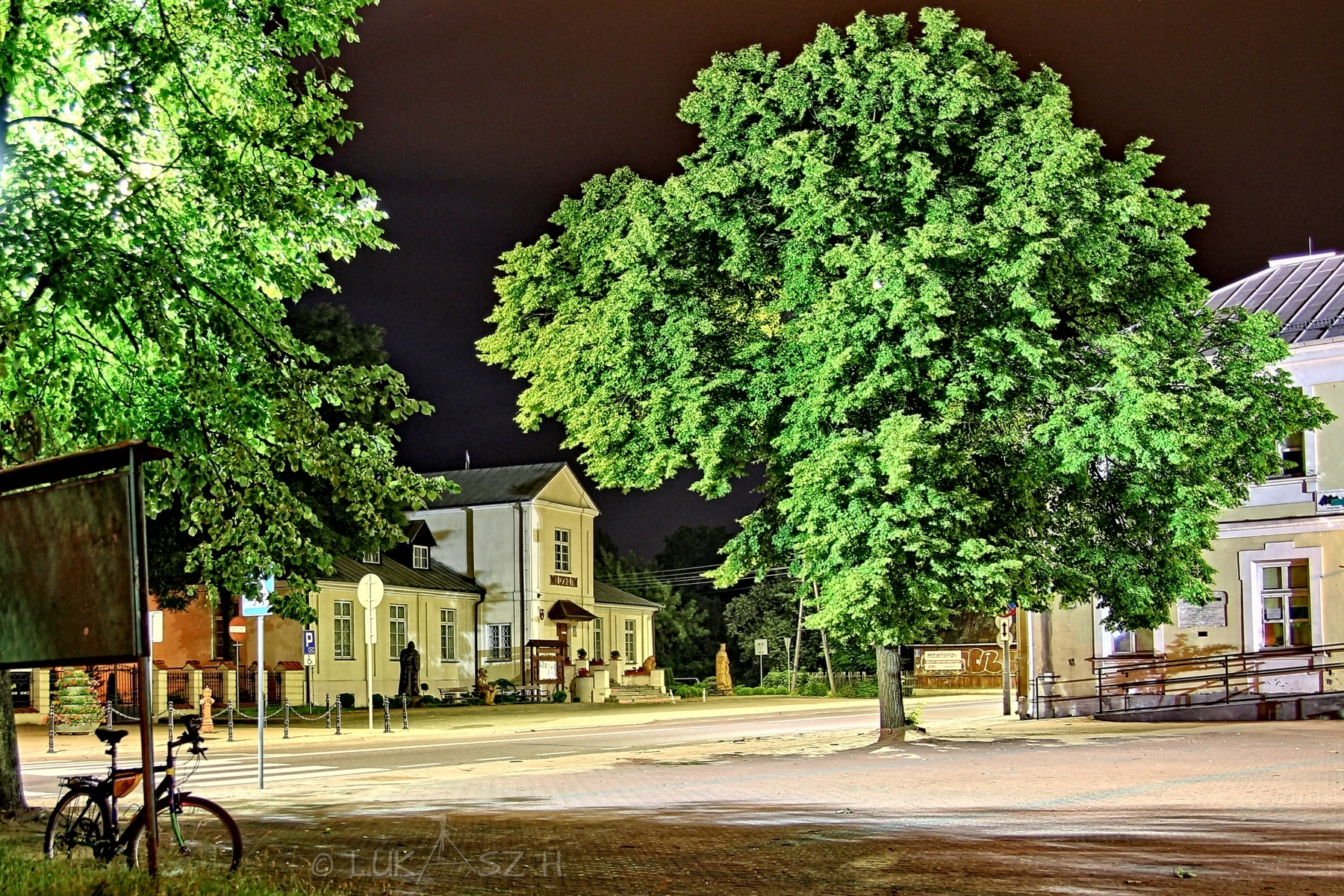 Muzeum Regionalne w Łukowie nocną porą. Fot. Zasoby własne / The Regional Museum in Łuków at night. Photo Own resources
- Park miejski z amfiteatrem - przy pięknej pogodzie można napawać się parkową zielenią, czasem wziąć udział w miejskich uroczystościach, posłuchać koncertów, latem obejrzeć ciekawe filmy,
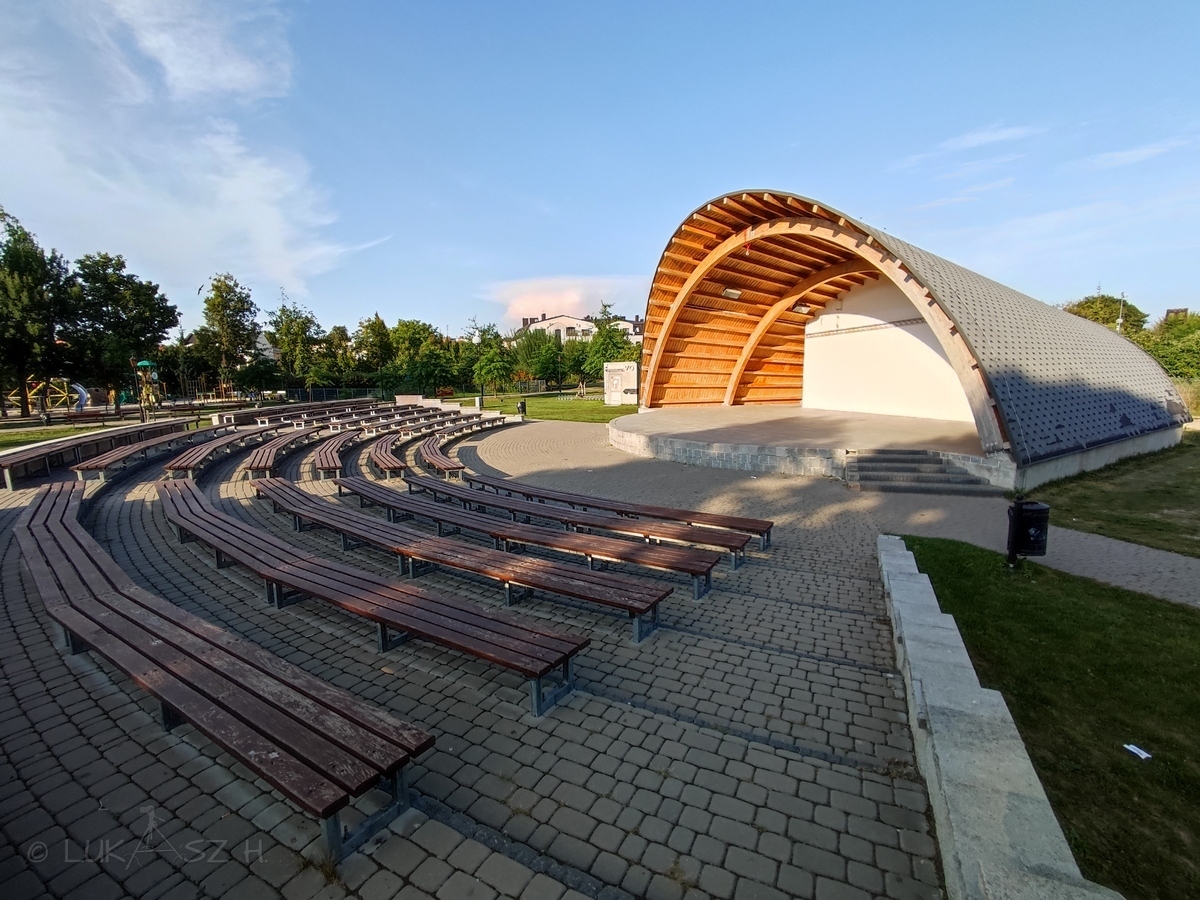 Amfiteatr w parku miejskim. Fot. Zasoby własne / Amphitheater in the city park. Photo Own resources
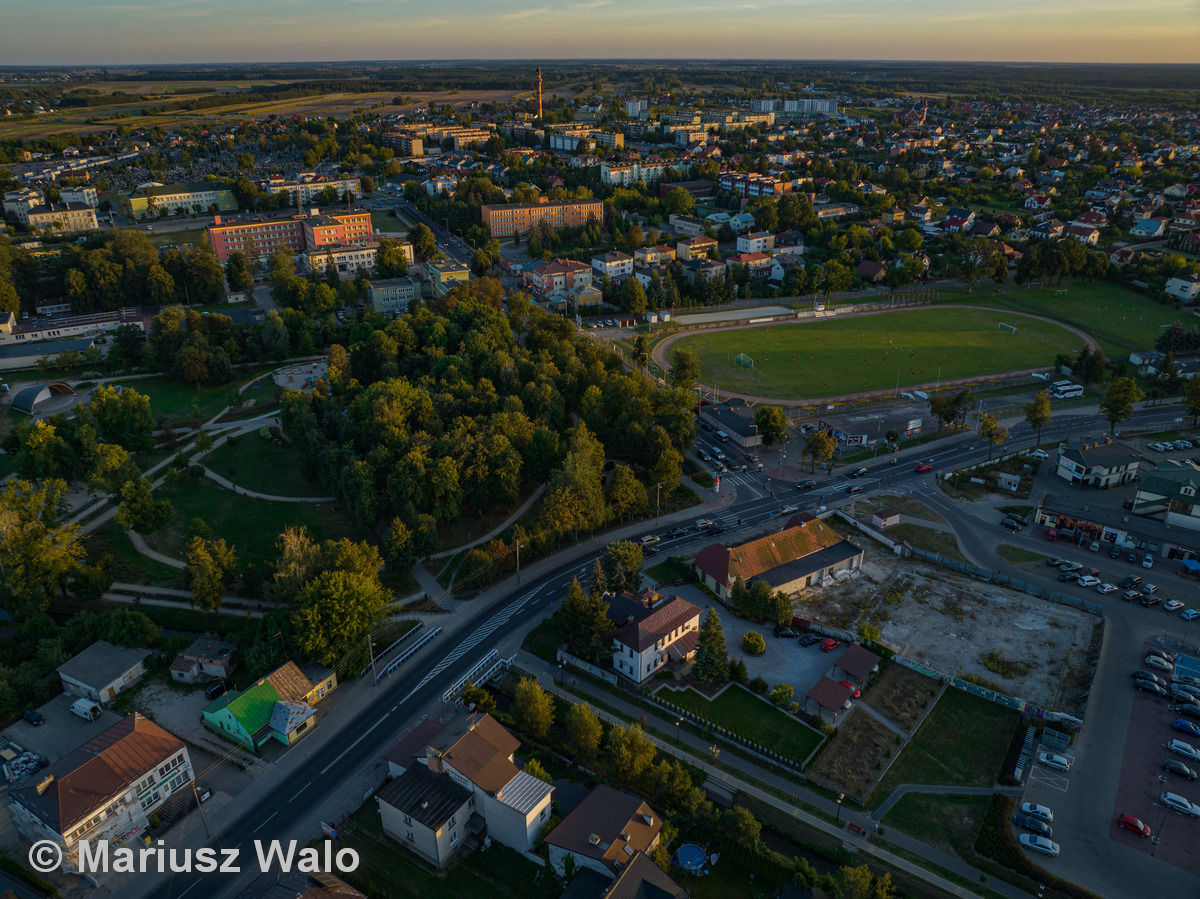 Łuków - widok z lotu ptaka (drona) - widok na park i stadion miejski. Fot. Mariusz Walo / Łuków - bird's eye view (drone) - view of the park and the city stadium. Photo Mariusz Walo
- Zalew "Zimna Woda" - polecam wybrać się poza miasto i pospacerować wokół zalewu, po którym można popływać kajakiem, spróbować swoich sił na nartach wodnych, powędkować, rozpalić grilla,
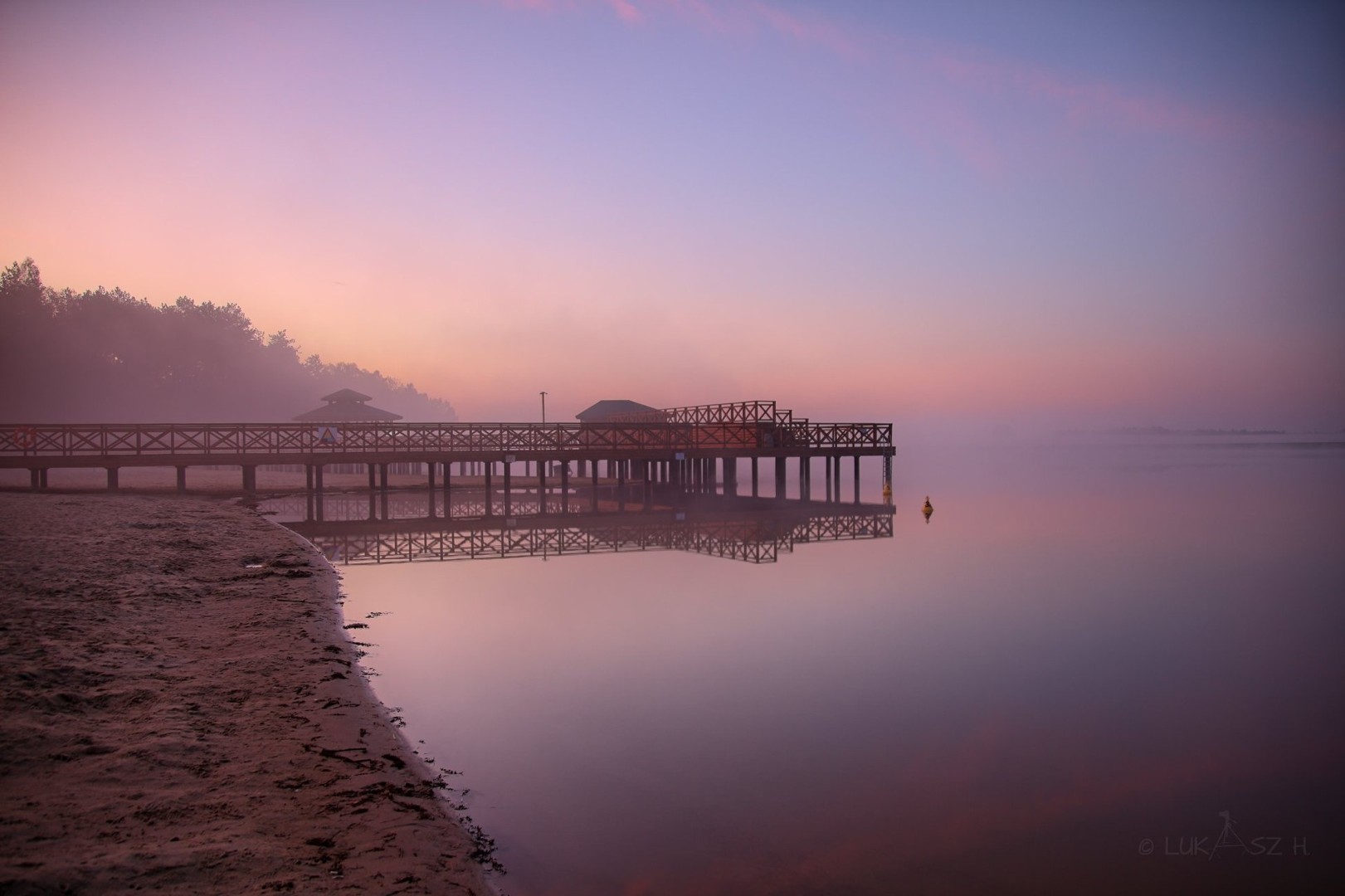 Zalew Zimna Woda bardzo wczesnym rankiem. Fot. Zasoby własne / Zimna Woda lagoon very early in the morning. Photo Own resources
- Łukowski Ośrodek Kultury (ŁOK) - wpadnij na koncert albo sztukę teatralną, obejrzyj film w kinie, przyjdź na wystawę w galerii "PROwizorium".
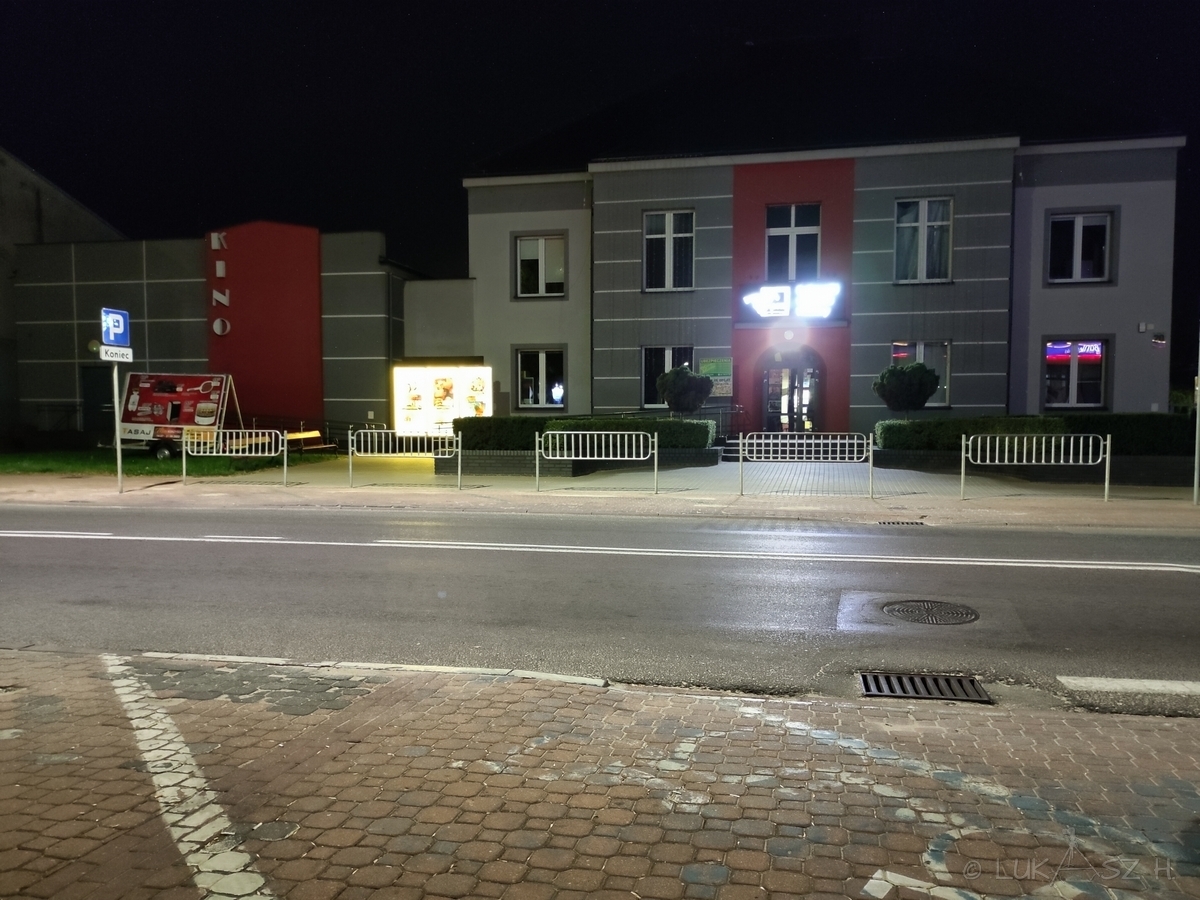 Łukowski Ośrodek kultury (ŁOK) nocą, zaraz obok kino. Fot. Zasoby własne / Cultural Center in Łuków (Łukowski Ośrodek Kultury - ŁOK) at night, next to it a cinema. Photo Own resources
Mam nadzieję, że każdy znajdzie coś dla siebie, że choć jedna rzecz przypadnie do gustu i choć troszkę zadziwi albo zachwyci.
No dobrze... Gadanie gadaniem, ale skrytka sama się nie znajdzie...
Słowa, słowa, słowa - korzystał z nich Henryk Sienkiewicz, a kesza znajdziesz dzięki nim...
No właśnie gdzie? Użyj tych trzech magicznych słów, a znajdziesz skrytkę!
N ??° ??.???' E ??° ??.???'
Niezbędne informacje uzyskasz zdobywając wszystkie pięć lokalizacji skrytki Adventure Lab "Wpadnij do Łukowa / Come over to Łuków"
Życzę wspaniałej zabawy!
English version
Wpadnij do Łukowa / Come over to Łuków [Adventure Lab BONUS]
The cache is NOT located at the starting coordinates. To find out where the hiding place is, you have to go through all the stages of the Adventure Lab cache "Wpadnij do Łukowa / Come over to Łuków"
I realize that tiny Łuków is not the same as big cities - Warsaw, Kraków, Gdańsk and it will be difficult to get good feedback. Probably the Adventure Lab "Wpadnij do Łukowa / Come over to Łuków" will not captivate all cachers, but maybe some people will like it.
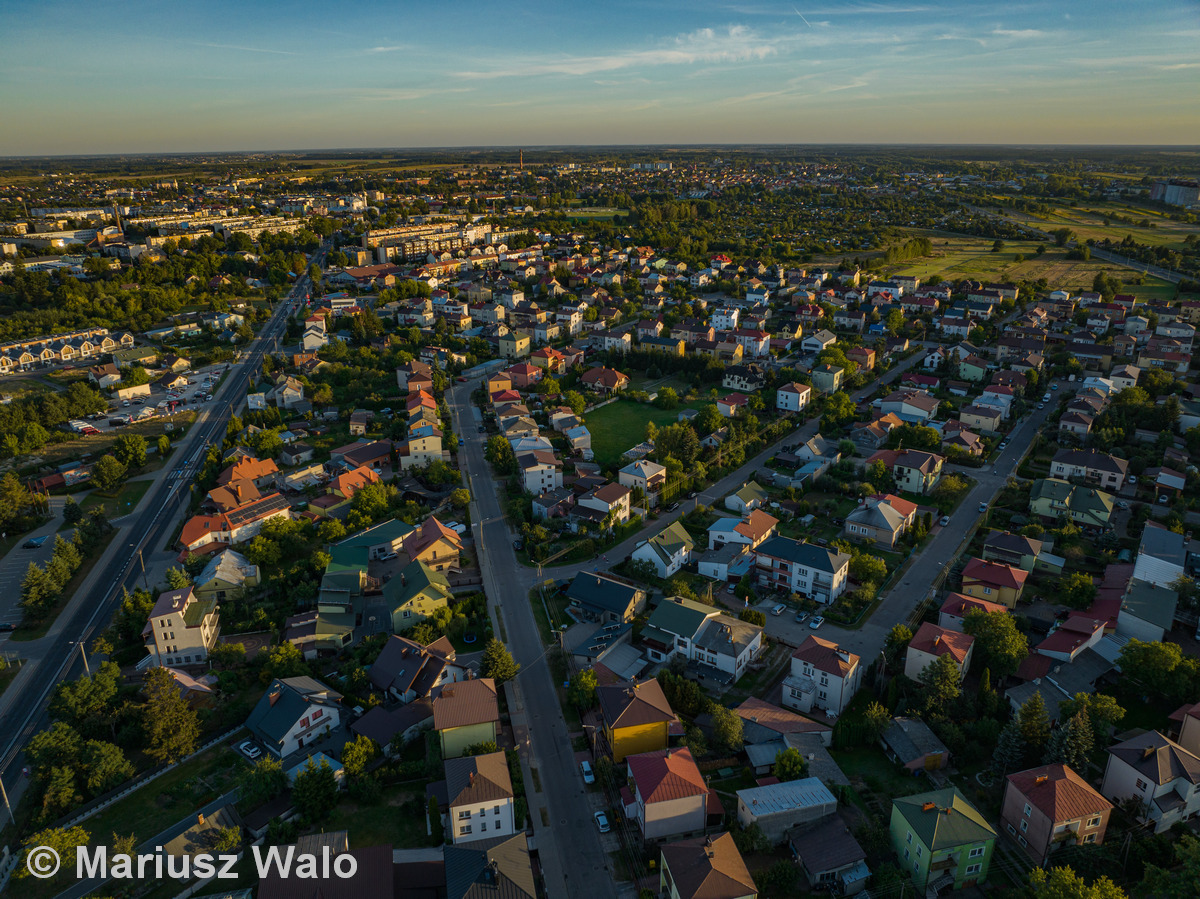 Łuków - widok z lotu ptaka (drona). Fot. Mariusz Walo / Łuków - bird's eye view (drone). Photo Mariusz Walo
I thought to myself that if I have a loan to create an adventure and I can decide where it will be, why should I not distinguish Łuków - the city where I live, where I hide other caches?
I was not born in Łuków, I lived here after my studies. From day to day I observe changes taking place in it - in my opinion, changes for the better.
I will try not to be boring and briefly present the history of the city and its advantages in the description for BONUS - in the Adventure Lab description there is really little space, especially when you want to fit the Polish and English versions.
Łuków is a town that is a municipal commune in Poland, in the Lubelskie Province, in the Łuków County. It is the seat of the authorities of the Łuków poviat and the rural commune of Łuków. In Łuków there is a railway junction with a junction station, there is a footwear, meat and food industry. Łuków is also the largest city between Lublin, Siedlce, Puławy and Biała Podlaska.
The historical sources available so far do not specify when Łuków was established. The contractual date of the city's foundation is 1233, from which the first historical mention of the already existing Łuków castellany comes.
The name of Łuków is most likely related to the topography of the area and comes from the pre-Slavic word "łęg" ("ług", "łuk" - lye) meaning a marshy, lowland, hardly accessible area. Some historians and linguists have suggested in the past that the name of the city may be related to a weapon used in the Middle Ages called "łuk" (the bow), but more detailed research has not confirmed the thesis that bows were produced in the city. The sources also do not confirm the hypothesis that the name Łuków comes from Łuk or Łukasz, the possible owner of the village.
The coat of arms of the city shows a bear standing on two legs, which, according to legend, was encountered by one of the Piast lords. The black-colored animal is depicted against the background of a red shield, and over the bear's head there is a crown symbolizing that Łuków was a royal town in the past.
The city, located on the border of marshes and forests, has been an important strategic point since its inception and secured the Polish borders against the invasions of the Yotvingians, Lithuanians and Tatars. Having been destroyed many times, Łuków had to strengthen its defense and for this purpose, in 1250, prince Bolesław V the Chaste brought the knightly order of the Templars here. The prince also planned to establish a bishopric in Łuków.
Currently, there are several Roman Catholic parishes in Łuków, the oldest of which are: "Św. Rocha"("St. Roch"), "Przemienienia Pańskiego" ("Transfiguration of the Lord"), "Podwyższenia Krzyża" ("Exaltation of the Cross").
Jews who settled in Łuków as early as in the 14th century are also connected with Łuków. The rapid increase in their number resulted in the fact that at the turn of the 19th and 20th centuries they constituted about 2/3 of the population (about 8,000). There used to be a synagogue in Łuków - at the intersection of Bóżniczna (now Zdanowskiego) and Staropijarska Streets, demolished in July 1944. Near the intersection of both streets, there is a plaque describing its existence and the history of the Jews. Moreover, an obelisk commemorating the Jews of Łuków stands on Warszawska Street, around which matzevot found in the city have been placed.
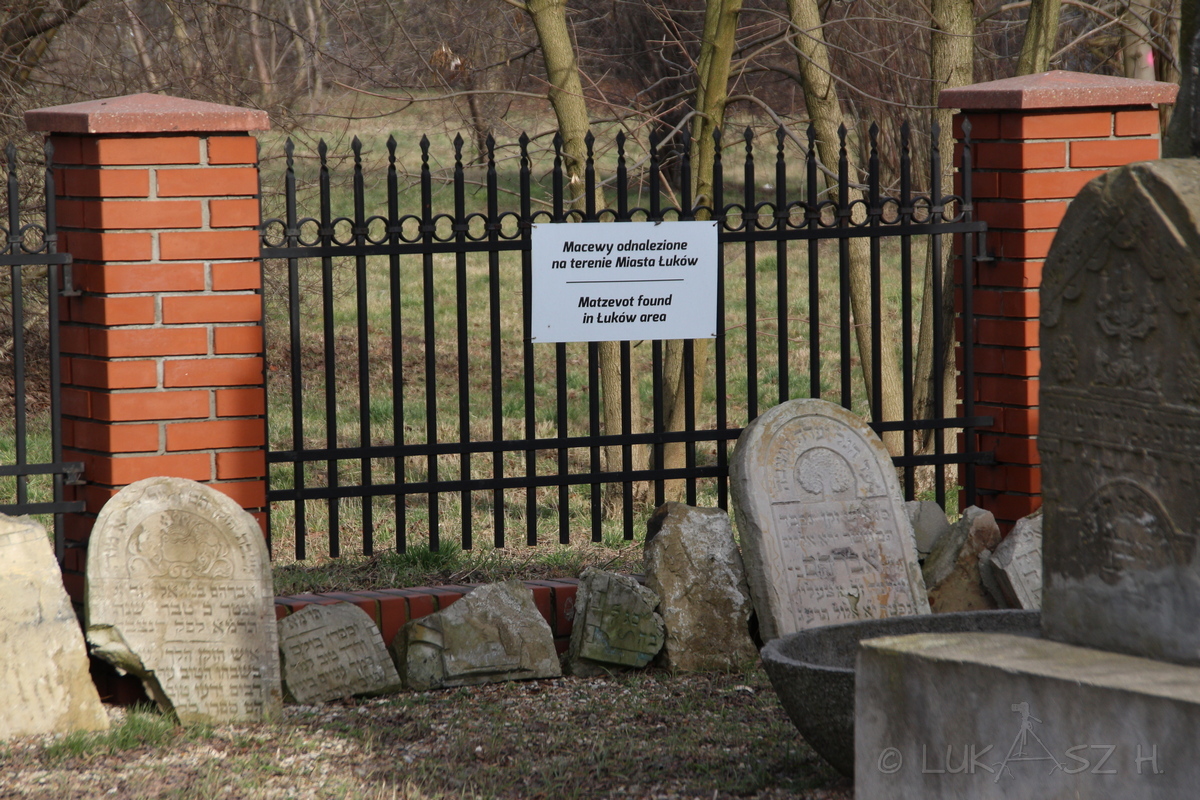 Kolekcja macew (odnalezionych na terenie Miasta Łuków) zdeponowana obok obeliska przy ulicy Warszawskiej. Fot. Zasoby własne / A collection of matzevot (found in the City of Łuków) deposited next to the obelisk at Warszawska Street. Photo Own resources
The history is extensive, for more information, I invite you to read Wikipedia, for example.
As I mentioned at the beginning (briefly) in Łuków some buildings related to the history of the city have survived. However, new places have also been created to meet the needs of the majority of residents (probably not all, because there are certainly those who criticize - they have the right to do so).
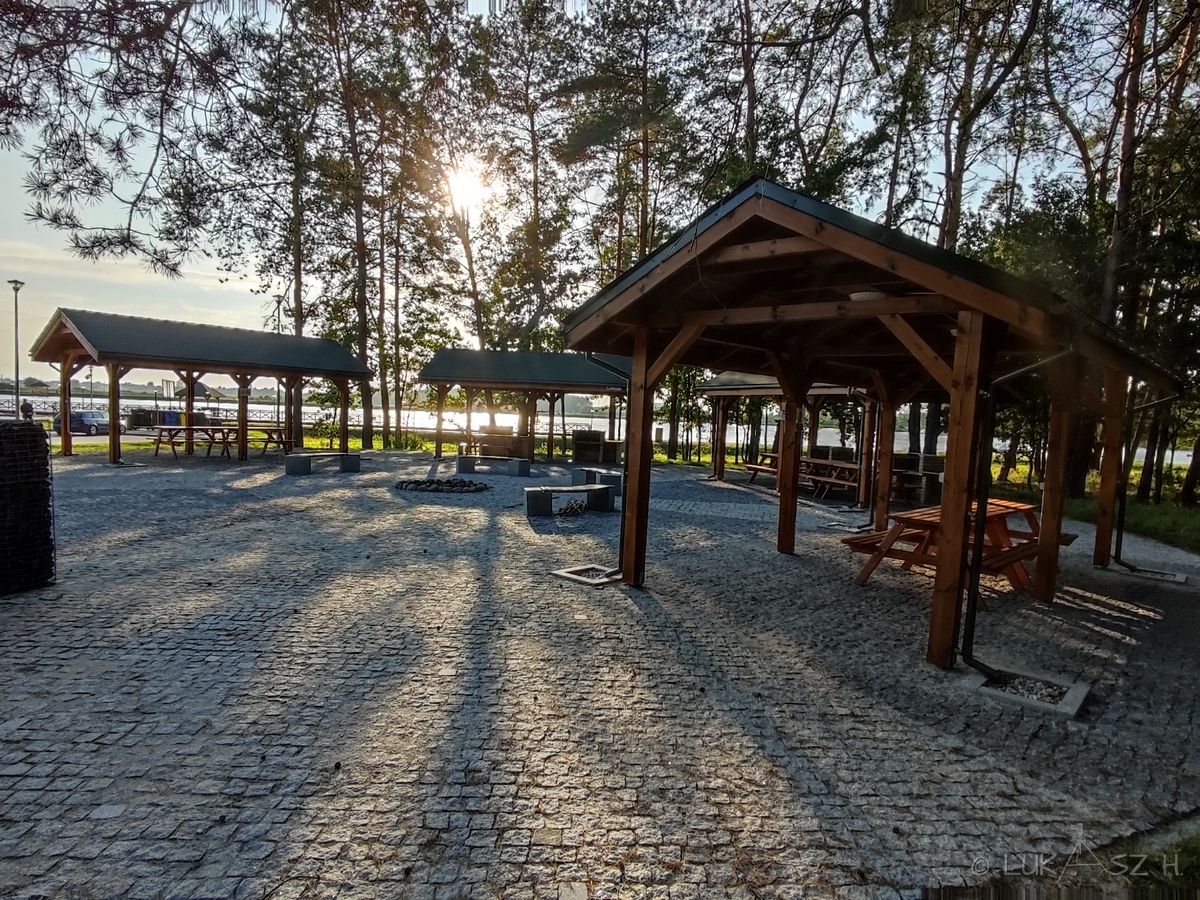 Zalew Zimna Woda - miejsca piknikowe. Fot. Zasoby własne / Zimna Woda Lagoon - picnic spots. Photo Own resources
In Łuków there is a wide access to medicine, education, you can successfully play sports (we have sport fields, a sports pool, and in summer you can use the outdoor swimming pool complex with slides for recreation).
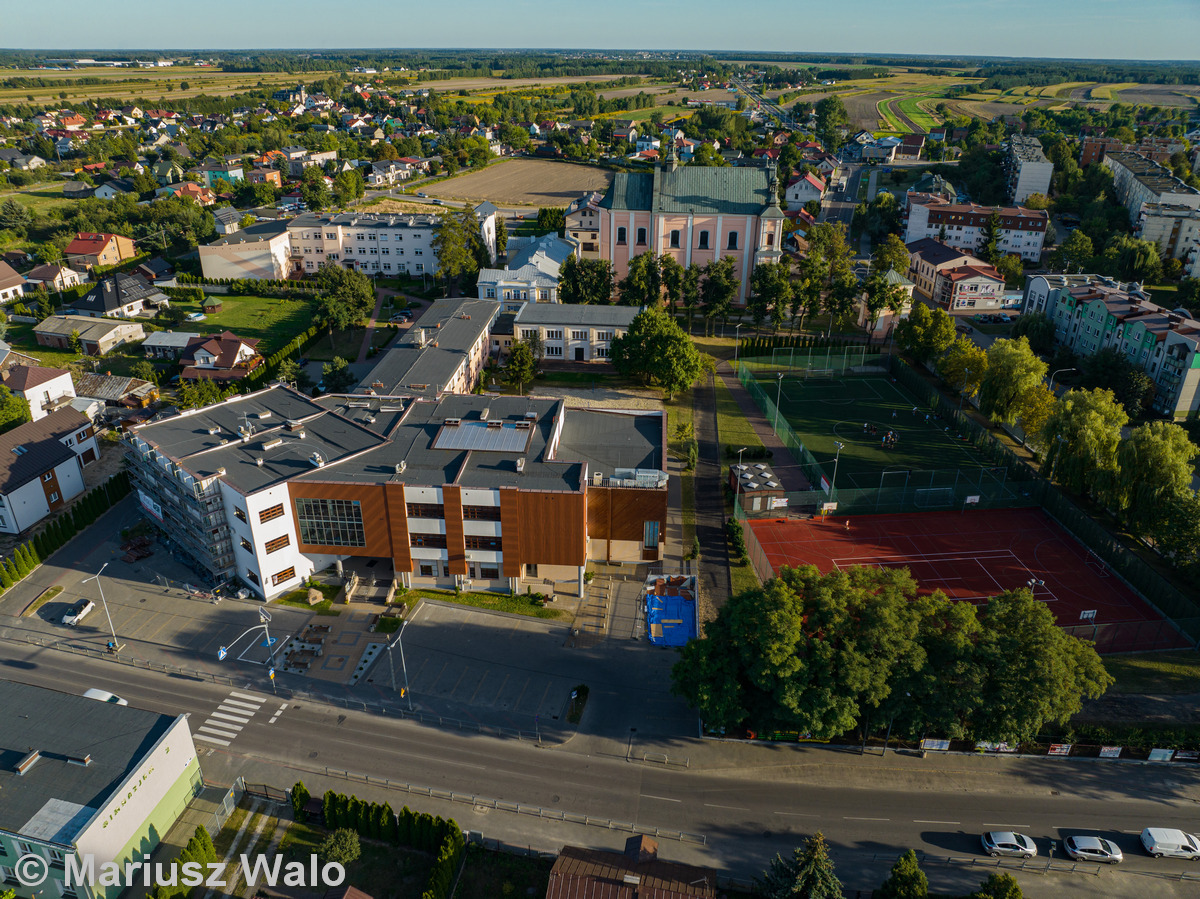 Łuków - widok z lotu ptaka (drona) - na pierwszym planie liceum ogólnokształcące, w tle Kościół pw. Podwyższenia Krzyża. Fot. Mariusz Walo / Łuków - bird's eye view (drone) - in the foreground a general secondary school, in the background the Church of Exaltation of the Cross. Photo Mariusz Walo
If you want more space, fresh air - be sure to visit a huge forest complex with, among others, nature reserves:
- Jata - a forest nature reserve located in the Łuków commune - part of the area of 337.42 ha is under strict protection, the rest of the area of 779.52 ha is a partial reserve. It is one of the oldest reserves in Poland, a place where the noise of fir forests will cause a moment of reflection in your thoughts, and the monuments located by the tourist path will immediately take you to distant times and fill you with the desire to learn more secrets of the January Uprising and World War II,
- Topór - a forest nature reserve located in the Łuków commune, the natural occurrence of fir in its north-eastern border of its range is protected.
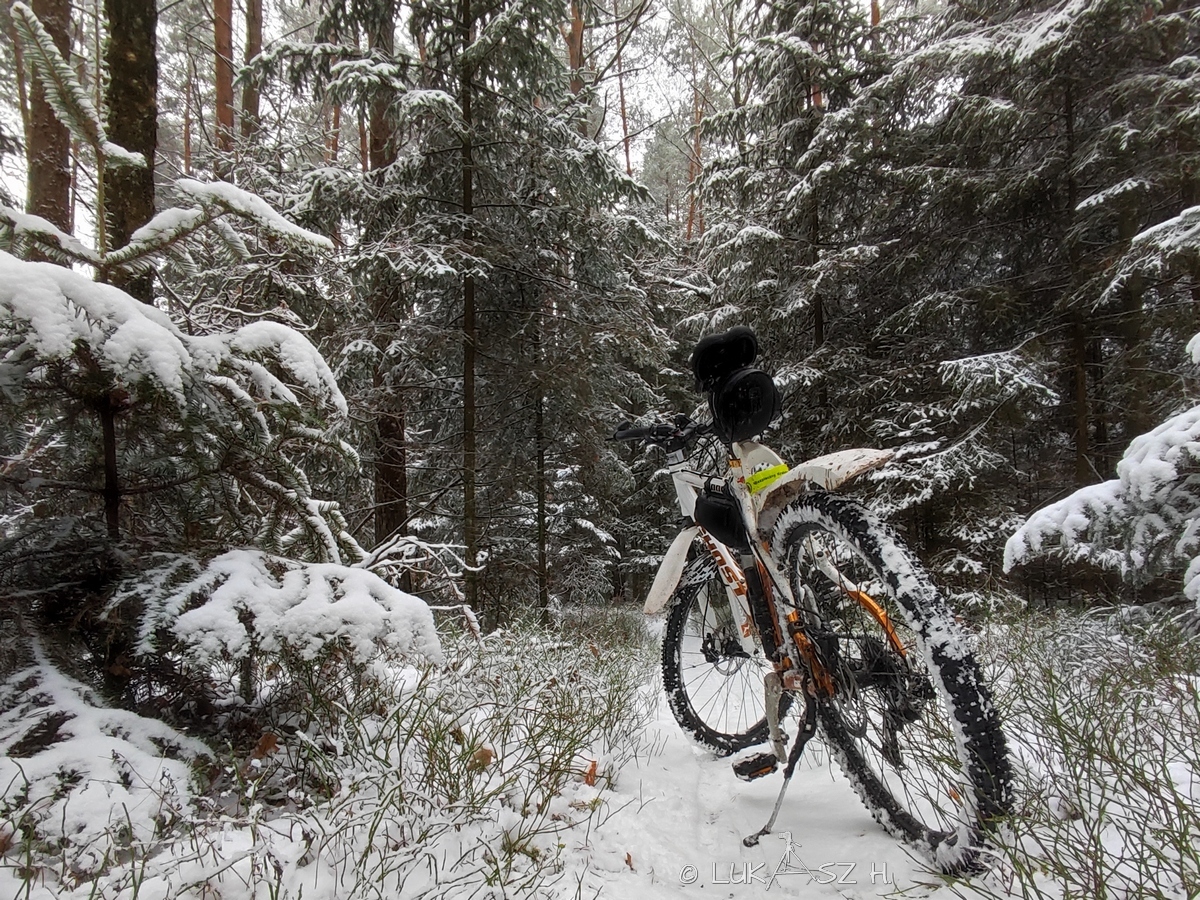 Rowerem po Jacie - dwa kółka w lesie przez cztery pory roku. Fot. Zasoby własne / By bike around Jata - two wheels in the forest for four seasons. Photo Own resources
You can successfully jog here, walk with poles, ride a bike or just go for a walk. Start the trail from the lagoon "Zimna Woda", or drive closer to the reserves, where you can easily leave your car in the forest parking lot.
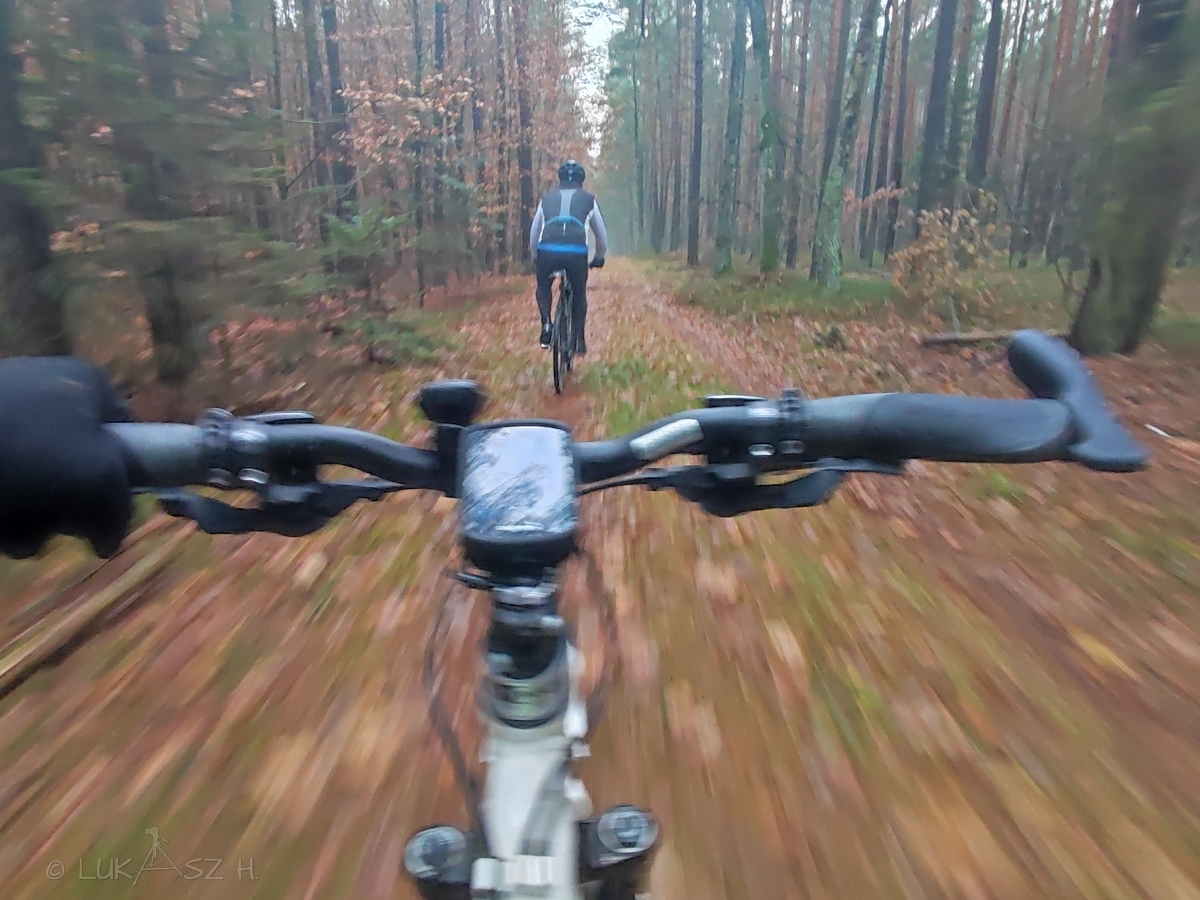 Rowerem po Jacie - dwa kółka w lesie przez cztery pory roku. Fot. Zasoby własne / By bike around Jata - two wheels in the forest for four seasons. Photo Own resources
In my opinion, special places worth visiting in Łuków today are:
- Muzeum Regionalne w Łukowie (Regional Museum in Łuków) - here you will learn about the culture, history of the city and its surroundings, see ammonites, learn about Henryk Sienkiewicz - Polish writer at the turn of the 19th and 20th centuries, Nobel Prize winner,
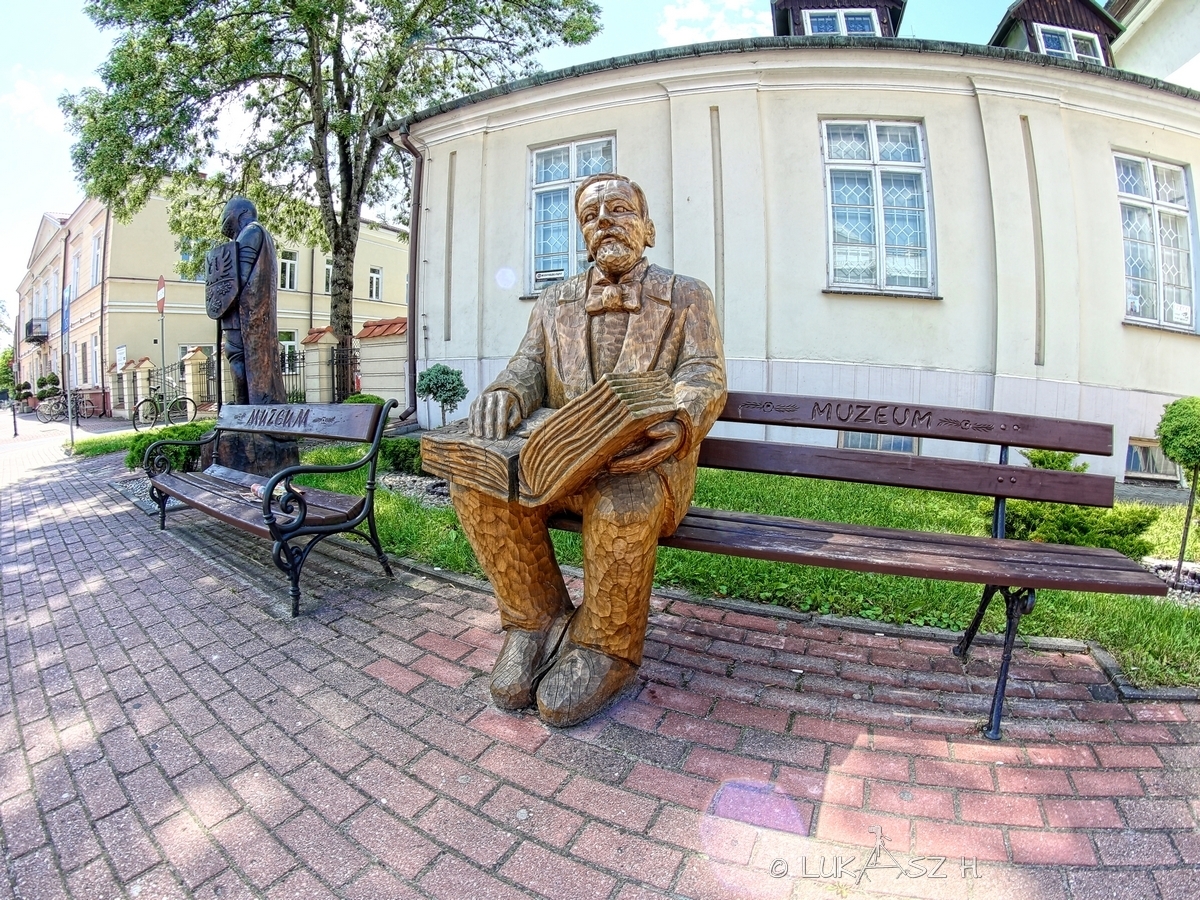 Muzeum Regionalne w Łukowie - Henryk Sienkiewicz na swojej ławeczce. Fot. Zasoby własne / The Regional Museum in Łuków - Henryk Sienkiewicz on his bench. Photo Own resources
- City park with an amphitheater - in fine weather, you can enjoy the park's greenery, sometimes take part in city celebrations, listen to concerts, watch interesting movies in summer,
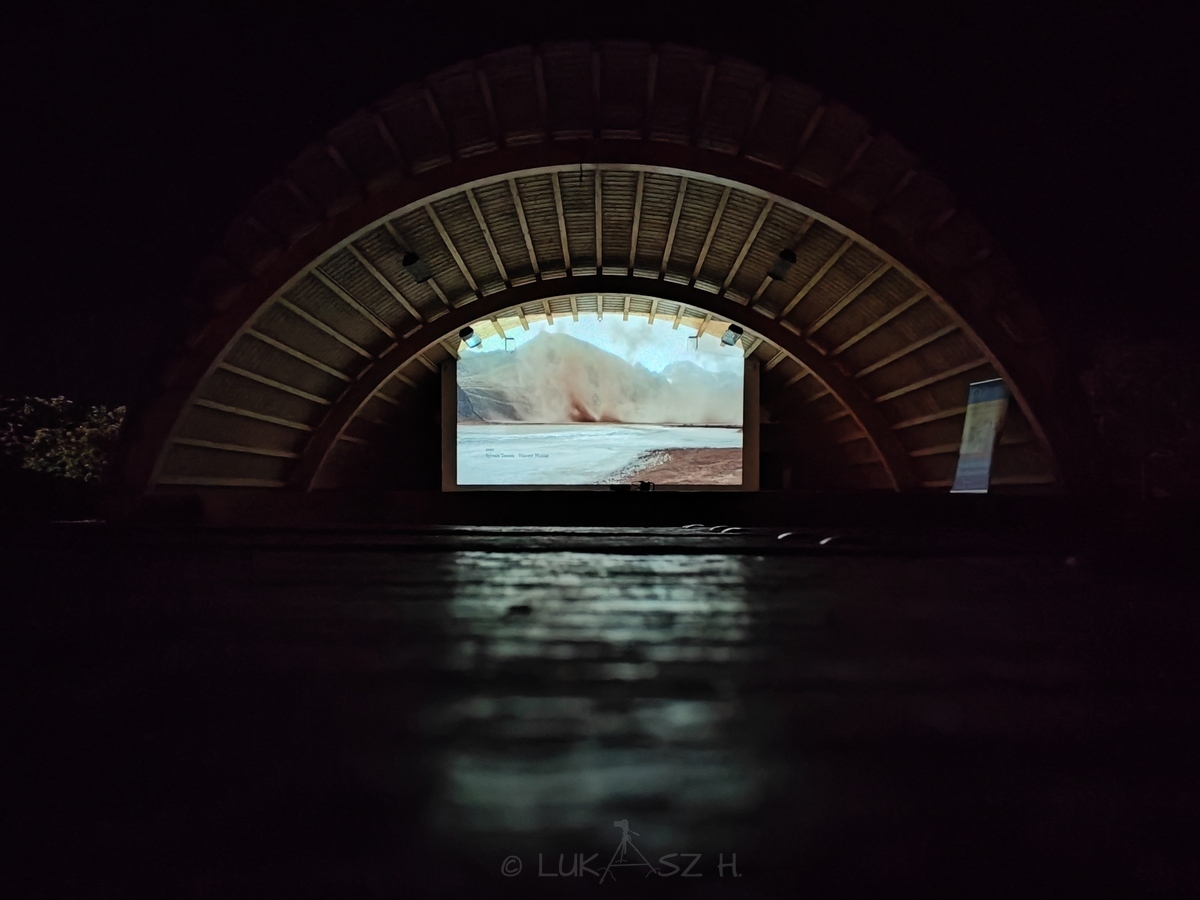 Kino letnie w amfiteatrze. Fot. Zasoby własne / Summer cinema in the amphitheater. Photo Own resources
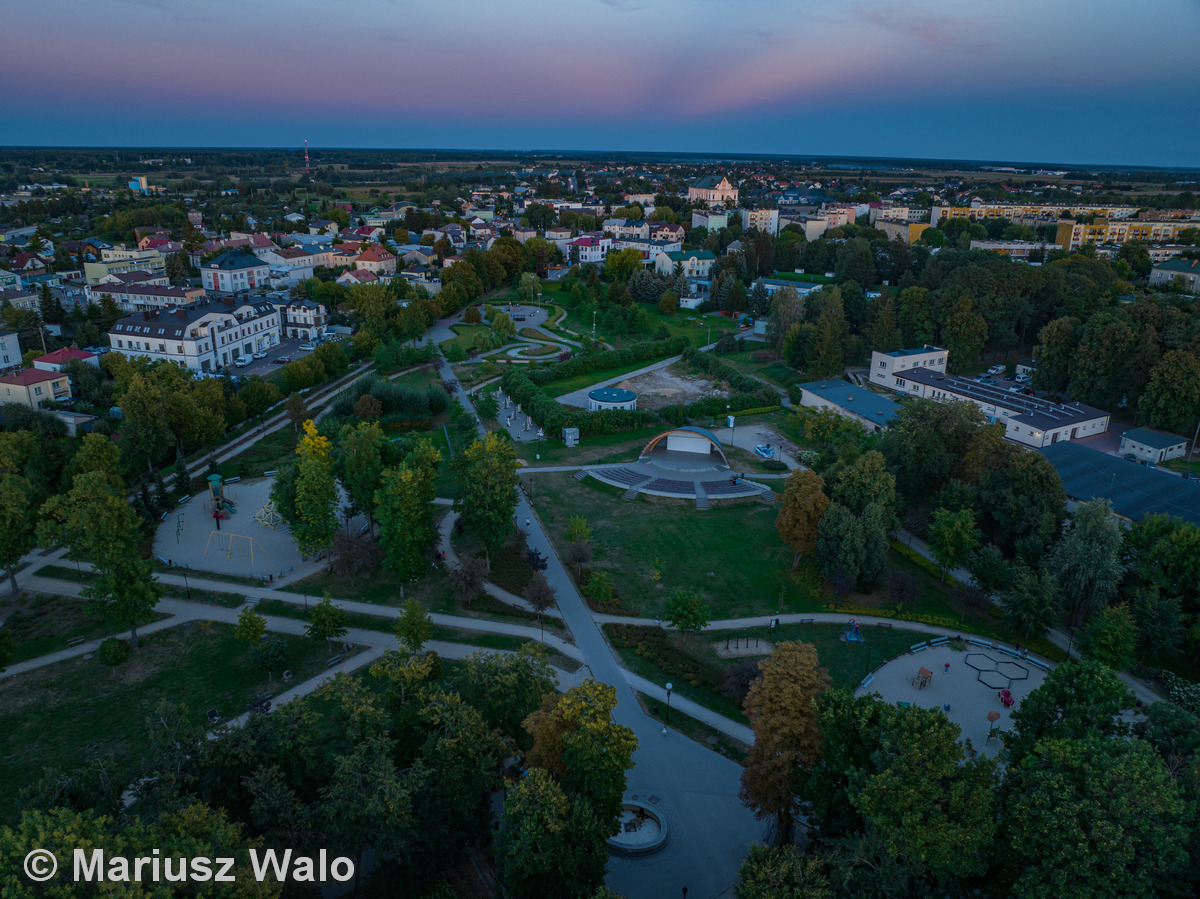 Łuków - widok z lotu ptaka (drona) - widok na park miejski. Fot. Mariusz Walo / Łuków - bird's eye view (drone) - view of the city park. Photo Mariusz Walo
- Lagoon "Zimna Woda" - I recommend going outside the city and walking around the lagoon, where you can go kayaking, try your hand at water skiing, go fishing, light a barbecue,
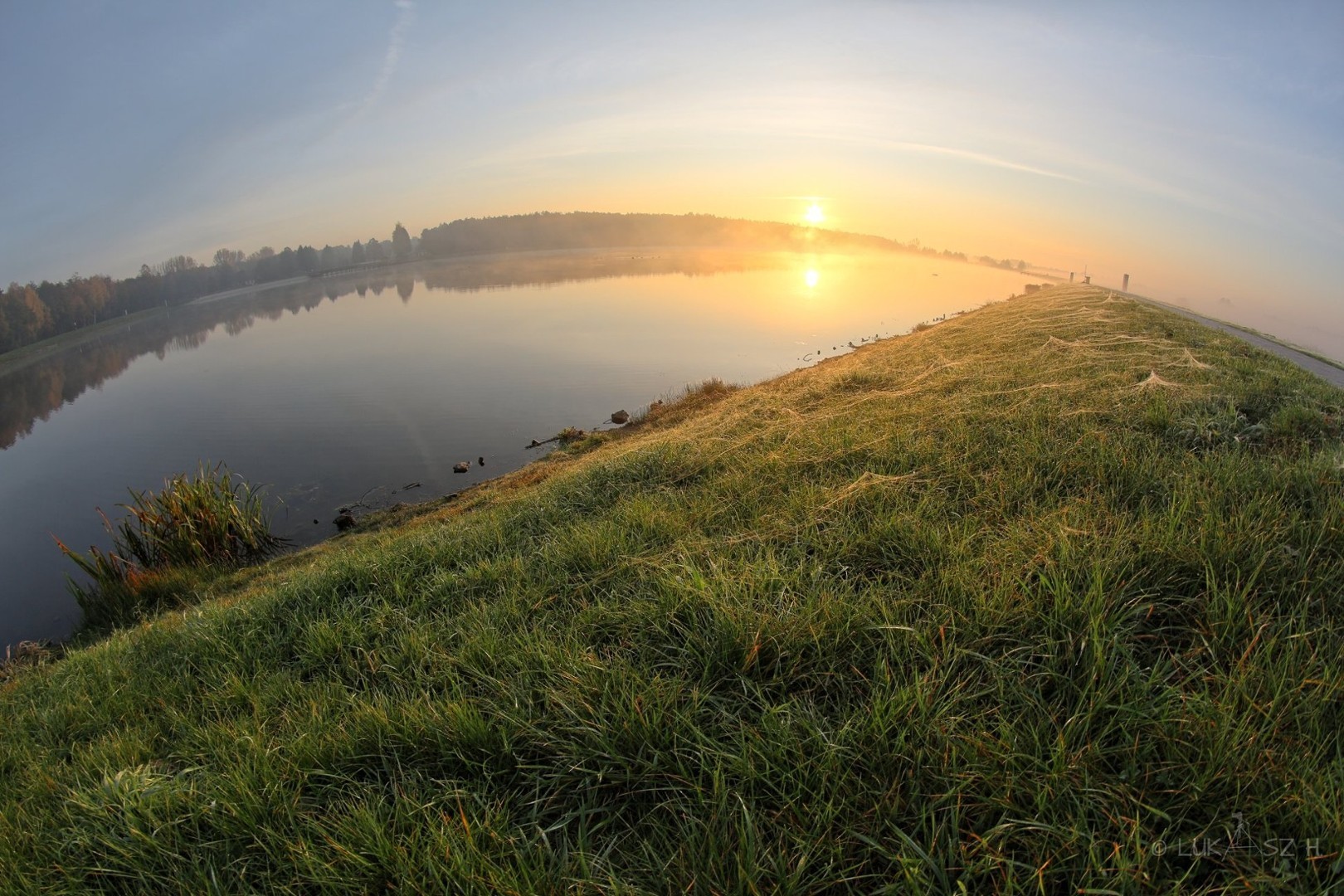 Zalew Zimna Woda o wschodzie słońca. Fot. Zasoby własne / Zimna Woda lagoon at sunrise. Photo Own resources
- Cultural Center in Łuków (Łukowski Ośrodek Kultury - ŁOK) - come to a concert or a theater play, watch a movie in the cinema, come to an exhibition in a gallery "PROwizorium".
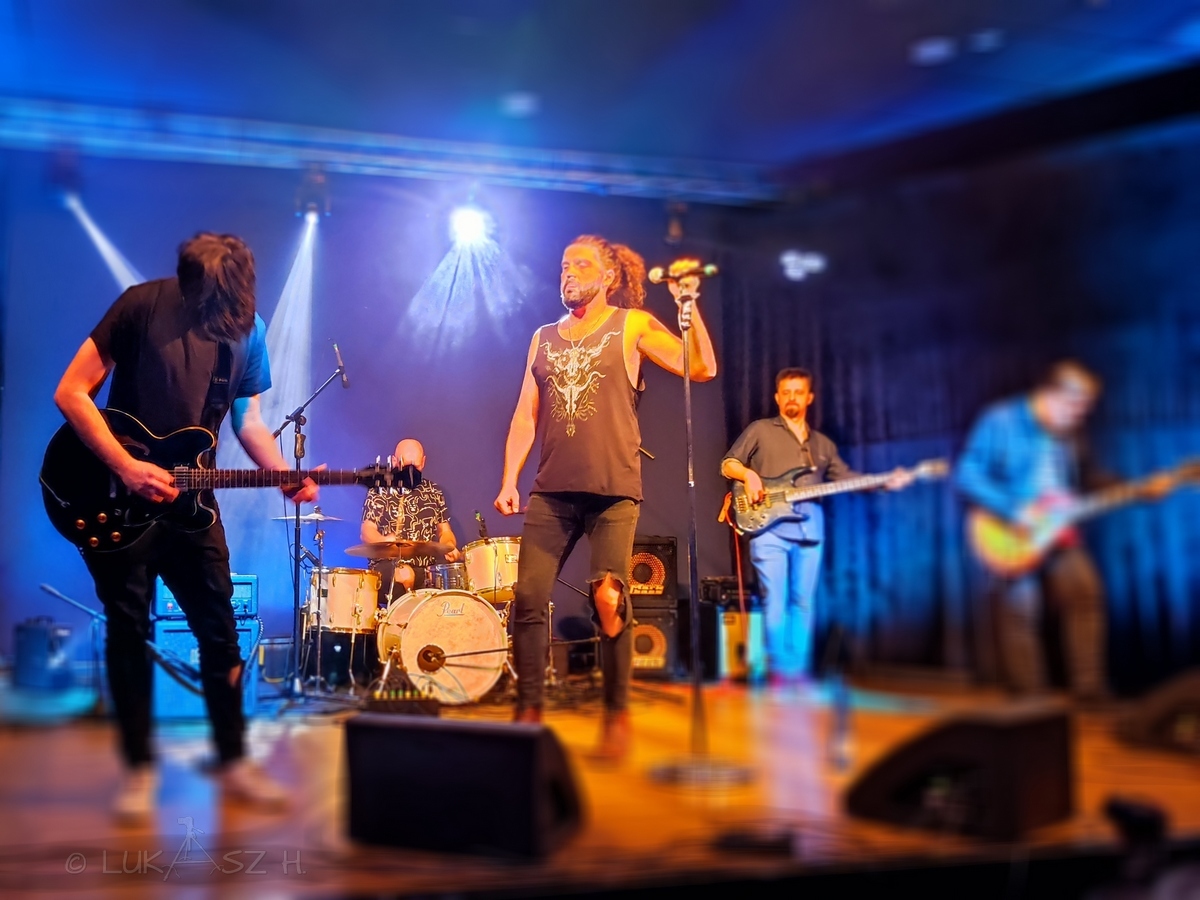 Łukowski Ośrodek kultury (ŁOK) - jeden z wielu koncertów i imprez kulturalnych. Fot. Zasoby własne / Cultural Center in Łuków (Łukowski Ośrodek Kultury - ŁOK) - one of the many concerts and cultural events. Photo Own resources
I hope that everyone will find something for themselves, that they will like at least one thing and will surprise or delight at least a little.
Okay... Chatting, but the cache will not find itself ...
Words, words, words - Henryk Sienkiewicz used them, and you will find a cache thanks to them ...
Exactly where? Use these three magic words and you will find the hiding place!
N ??° ??.???' E ??° ??.???'
You will get the necessary information by obtaining all five Adventure Lab locations "Wpadnij do Łukowa / Come over to Łuków"
I wish you great fun!