Il travertino è una roccia calcarea sedimentaria di tipo chimico, molto utilizzata per le costruzioni di pregio. Il calcare che forma il travertino è uno dei depositi più frequenti in natura essendo prodotto dalla precipitazione del carbonato di calcio disciolto nell’acqua. La colorazione naturale del travertino varia dal bianco latte al nocciola, attraverso varie sfumature dal giallo al rosso ed è legata alla presenza degli ossidi che ha potuto assorbire durante la formazione.
Questa cache vi farà osservare da vicino il travertino termale che si forma in conseguenza della precipitazione di sali a partire da acque mineralizzate calde. Il raffreddamento di queste acque e la diversa pressione di diossido di carbonio tra l’atmosfera ed il sistema acquifero termale determinano intensi fenomeni di precipitazione in prossimità delle emergenze sorgentizie, con formazione di placche di travertino molto estese (fino a qualche chilometro) e molto spesse (anche centinaia di metri).
L’anidride carbonica presente nel flusso idrico che percola nelle masse rocciose carbonatiche in questo caso è originata da processi di mineralizzazione legati ad eventi magmatici vulcanici della crosta terrestre che possono provocare un discioglimento del carbonato di calcio fino a dieci volte maggiore di quello ottenuto con anidride carbonica meteorica.
Questo fatto rende possibile la formazione di strutture travertinose spettacolari.
La precipitazione del carbonato di calcio avviene comunque su tutte le superfici disponibili, laddove il flusso delle acque lo consente; le incrostazioni ricoprono la vegetazione presente, i clasti, la roccia in posto, i frammenti di vegetali (foglie, rami, etc) ed anche eventuali rifiuti lasciati dall’uomo. La morfologia dei depositi e la loro tessitura dipendono dal tipo di strutture che vengono incrostate, dalla velocità di flusso delle acque, dal tasso di precipitazione, dall’entità del contributo della vegetazione alla sottrazione di CO2.

Nel territorio della Val d’Orcia depositi calcarei travertinosi, affiorano in continuità sui versanti a sud di Vignoni fino al corso del fiume Orcia. I travertini si sono deposti in tempi geologicamente recenti (Olocene) al di sopra delle formazioni della falda toscana. La deposizione avviene tutt’ora dalle acque termali provenienti dalle sorgenti localizzate a monte e nel centro di Bagno Vignoni.
L’Italia, in generale, costituisce un’eccezionale palestra di indagine per questo tipo di litologie, visto il numero di affioramenti presenti, ma la Toscana in particolare si pone come regione privilegiata grazie alla contemporanea presenza dei fattori fondamentali per la presenza di queste litologie: calcari nel substrato, acqua, calore e tettonica. La grande quantità di depositi carbonatici presenti sia in superficie che nel sottosuolo e nei quali le acque si arricchiscono in ioni di Calcio rende quindi possibile la deposizione (principalmente per degassazione) dei travertini che, a loro volta, beneficiano in Toscana della presenza di un elevato flusso di calore endogeno caratterizzante l’area geotermica del Monte Amiata.

Definizione:
Come travertino si definiscono, in particolare, quei depositi carbonatici non-marini, autoctoni, laminati, poco porosi, depositati presso sorgenti termali e con fabric primario a cespugli (bushy). I depositi di travertino sono comunemente associati a zone tettonicamente e sismicamente attive, lungo fratture o faglie normali, le quali agiscono da vie preferenziali per la risalita rapida di acque calde profonde.
Macroscopicamente, si tratta di una roccia caratterizzata da facies laminari compatte, formate da cristalli di calcite anche molto sviluppati (fino a decine di centimetri) e, in minor quantità, da lamine microcristalline, talvolta di derivazione biogenica, generalmente più porose. Queste litofacies sono osservabili essenzialmente in due principali ambienti deposizionali che spesso coesistono lateralmente:
1) dorsali di travertino: corrispondono alle risorgenze lineari più o meno rettilinee lungo faglie e fratture del terreno, dalle quali acque termali e gas sotterranei risalgono e scaturiscono in superficie.
2) pendii terrazzati: il fluire delle acque calde che si allontanano dalla sorgente ne provoca un graduale raffreddamento con conseguente precipitazione del carbonato di calcio in corrispondenza degli ostacoli presenti lungo il percorso. Si formano così dighe e barriere che individuano pozze di varia fino a piscine di acqua termale contenenti anche piccole bocche di sorgenti sul fondo.
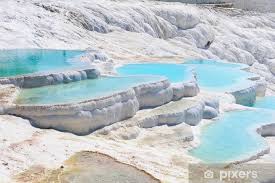
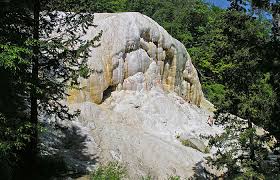
Entrambe queste formazioni macroscopiche sono osservabili a Bagno Vignoni. Presso questo borgo medioevale infatti sono presenti alcune placche di travertini. Il borgo stesso, che sorge su una di queste placche, è costruito intorno alla sorgente principale (52°C la più calda di tutta la Toscana) localizzata nella piazza principale dove forma una caratteristica e scenografica vasca termale. Queste acque defluiscono poi in direzione del Fiume Orcia, nel quale si gettano dopo circa 300 m di un ripido pendio di travertino lungo il quale si formano le tipiche morfologie di cascate, pozze e terrazzi.
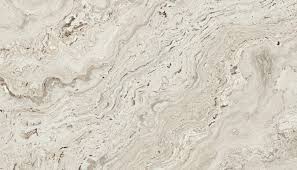
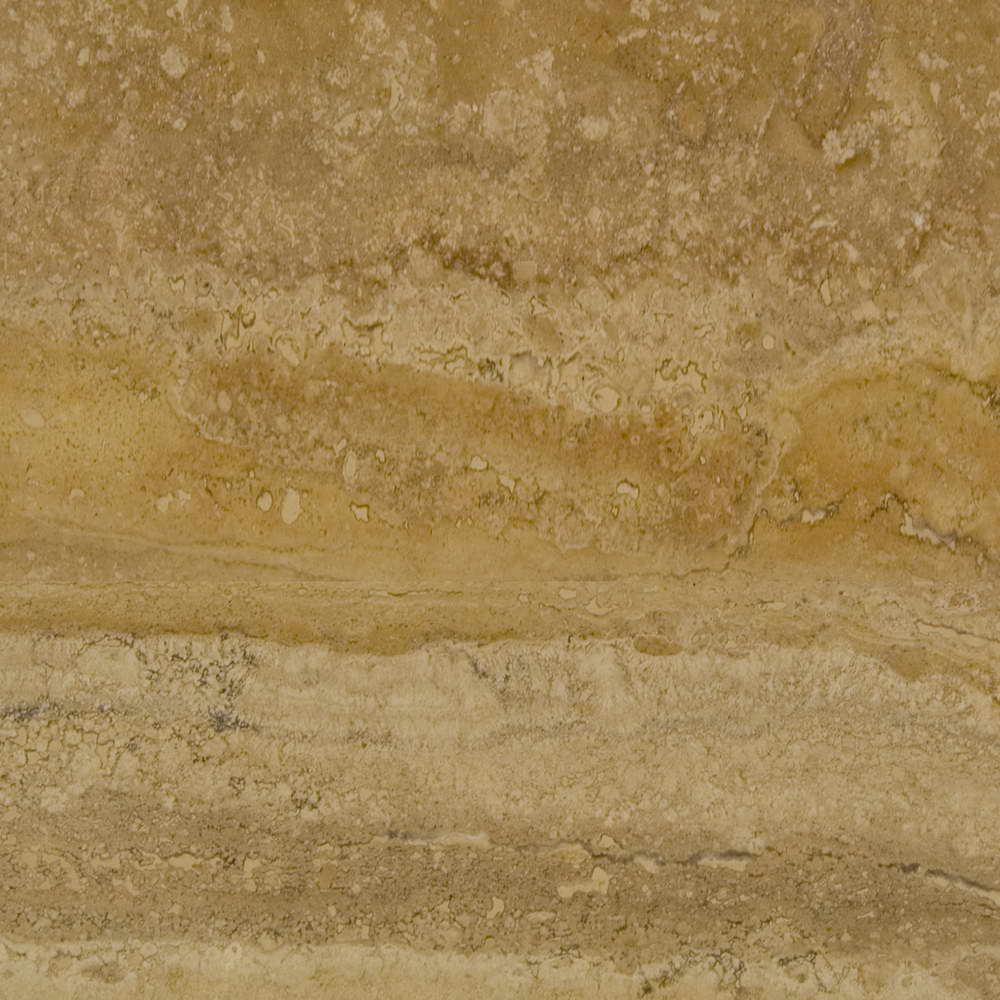
Tra i fattori maggiormente variabili nell’aspetto dei travertini va annoverato il colore: la calcite di precipitazione è bianca ed i travertini hanno tendenzialmente questa sfumatura che la presenza di pigmenti colorati può modificare. Ecco quindi travertini gialli per la presenza di ossidi limonitici, rossi, per la presenza di ematite, neri quando la colorazione può essere imputabile a magnetite o a materiale organico che precipita assieme al carbonato di calcio

IMPORTANTE: E' ASSOLUTAMENTE VIETATO CAMMINARE SULLA CASCATA, L’OWNER NON SI ASSUME ALCUNA RESPONSABILITA’ PER IL MANCATO RISPETTO DEL DIVIETO.
LA CACHE:
Per loggare la cache rispondi alle seguenti domande tramite message center senza allegarle al log. Non è necessario aspettare la mia risposta, se qualcosa non va vi contatterò io.
- Recati alle coordinate impostate. Daventi a te c'è una fessurazione nel terreno, descrivi quello che vedi e dove è posizionato il travertino. Spiega brevemente, grazie a quello che hai imparato dal listing, perché è si trova proprio lì.
- Di che colore è? Per quale ragione?
- Tocca l’acqua, è fredda o calda? Ricordati questa risposta per lo step successivo.
- Recati al WP2, descrivi quello che vedi e che forma ha il travertino che si trova a terra. Spiega brevemente, grazie a quello che hai imparato dal listing, perché ha questa forma.
- Di che colore è? Per quale ragione?
- Tocca l’acqua, è fredda o calda? Ricordati questa risposta per lo step successivo.
- Recati al WP3, mentre ti riposi e magari fai un bel bagnetto in questa meravigliosa vasca, osserva la collina che ti sovrasta. Di quale materiale è fatta?
- Tocca l’acqua (o fai un bagno), è fredda o calda? Ricordandoti le due risposte precedenti prova a dare una motivazione al perché della temperatura trovata qui.
- Sul fondo della vasca c’è travertino o no?
-
Opzionale: scatta una foto tua o del tuo gps al WP che preferisci!
ENGLISH
Travertine is a chemical-type sedimentary limestone rock, widely used for valuable constructions. The limestone that forms travertine is one of the most frequent deposits in nature, being produced by the precipitation of calcium carbonate dissolved in the water. The natural color of travertine varies from milk white to hazelnut, through various shades from yellow to red and is linked to the presence of oxides that it was able to absorb during the formation.
This cache will make you observe closely the thermal travertine that is formed as a result of the precipitation of salts from hot mineralized waters. The cooling of these waters and the different pressure of carbon dioxide between the atmosphere and the thermal aquifer system determine intense precipitation phenomena in the vicinity of spring emergencies, with the formation of very large (up to a few kilometers) and very thick travertine plates (even hundreds of meters).
The carbon dioxide present in the water flow that percolates in the carbonate rock masses in this case originates from mineralization processes linked to volcanic magmatic events of the earth's crust that can cause a dissolution of the calcium carbonate up to ten times greater than that obtained with anhydride meteoric carbon. This fact makes it possible to form spectacular travertine structures.
However, the precipitation of calcium carbonate takes place on all available surfaces, where the flow of water allows it; the incrustations cover the vegetation present, the clasts, the rock in place, the fragments of vegetables (leaves, branches, etc) and also any waste left by man. The morphology of the deposits and their texture depend on the type of structures that are encrusted, on the speed of water flow, on the rate of precipitation, on the extent of the contribution of vegetation to the subtraction of CO2.
In the Val d'Orcia territory, travertine limestone deposits emerge continuously on the slopes south of Vignoni up to the course of the Orcia river. Travertines have settled in geologically recent times (Holocene) above the formations of the Tuscan aquifer. The deposition still takes place from the thermal waters coming from the sources located upstream and in the center of Bagno Vignoni.
Italy, in general, is an exceptional investigative center for this type of lithology, given the number of outcrops present, but Tuscany in particular stands as a privileged region thanks to the simultaneous presence of the fundamental factors for the presence of these lithologies: limestone in the substrate, water, heat and tectonics. The large amount of carbonate deposits present both on the surface and in the subsoil and in which the waters are enriched in calcium ions therefore makes it possible to deposit (mainly by degassing) the travertines which, in turn, benefit in Tuscany from the presence of a high endogenous heat flow characterizing the geothermal area of Mount Amiata.
Definition:
Travertine is meant non-marine carbonate deposits, autochthonous, laminated, not very porous, deposited at thermal springs and with primary bushy fabric. Travertine deposits are commonly associated with tectonically and seismically active areas, along fractures or normal faults, which act as preferential routes for the rapid ascent of deep warm waters.
Macroscopically, it is a rock characterized by compact laminar facies, formed by calcite crystals also very developed (up to tens of centimeters) and, in smaller quantities, by microcrystalline laminae, sometimes of biogenic derivation, generally more porous. These lithofacies are essentially observable in two main depositional environments that often coexist laterally:
1) travertine ridges: correspond to more or less rectilinear linear resurgences along faults and fractures of the ground, from which thermal waters and underground gases rise and flow to the surface.
2) terraced slopes: the flow of hot waters that move away from the source causes a gradual cooling with consequent precipitation of the calcium carbonate in correspondence with the obstacles present along the route. Dams and barriers are thus formed which identify pools of various sizes up to thermal water pools, also containing small mouths of springs on the bottom.
Both these macroscopic formations can be observed in Bagno Vignoni. In fact, in this medieval village there are some travertine plates. The village itself, which stands on one of these plaques, is built around the main source (52 ° C the warmest in all of Tuscany) located in the main square where it forms a characteristic and scenic thermal bath. These waters then flow in the direction of the Orcia River, in which they throw themselves after about 300 m of a steep travertine slope along which the typical morphologies of waterfalls, puddles and terraces are formed.
Color is one of the most variable factors in the appearance of travertines: the precipitation calcite is white and travertines tend to have this nuance that the presence of colored pigments can modify. So here are yellow travertines for the presence of limonitic oxides, red, for the presence of hematite, black when the coloring can be due to magnetite or organic material that precipitates together with the calcium carbonate
IMPORTANT: IT IS STRICTLY FORBIDDEN TO WALK ON THE WATERFALL, THE OWNER DOES NOT ASSUME ANY LIABILITY IN CASE OF ACCIDENT.
THE CACHE:
To log the cache, answer the following questions via message center without attaching them to the log. It is not necessary to wait for my answer, if something is wrong I will contact you.
1) Go to posted coordinates. In front of you there is a slit in the ground. Describe what you see and where the travertine is positioned. Explain briefly, thanks to what you learned from the listing, why it's located right there.
- What colour is it? For what reason?
- Touch the water, is it cold or hot? Remember this answer for the next step.
2) Go to WP2, describe what you see and what shape the travertine that is on the ground has. Briefly explain, thanks to what you learned from listing, why it has this form.
- What colour is it? For what reason?
- Touch the water, is it cold or hot? Remember this answer for the next step.
3) Go to WP3, while you rest and maybe take a nice bath in this wonderful tub, watch the hill above you. What material is it made of?
- Touch the water (or take a bath), is it cold or hot? Remembering the two previous answers, try to give a reason for the temperature found here.
- Is there travertine in the bottom of the tub or not?
4) Optional: take a picture of yourself or your GPS at the WP you prefer!
Sources:
https://www.parcodellavaldorcia.com
https://www.researchgate.net/publication/269883434_Il_patrimonio_di_travertini_e_calcareous_tufa_in_Toscana
http://www.architetturadipietra.it/wp/?p=4901